
Christian trauma counseling is professional therapy for the lasting effects of painful or frightening experiences, delivered by a counselor who treats your faith as part of the healing rather than something to set aside. At its best it pairs clinically sound trauma treatment with spiritual care you have asked for. At The Bridge Therapeutic Services in Tyler, Texas, we offer Christian counseling that integrates evidence-based psychological methods with a faith-informed perspective, in person and by telehealth across Texas. This guide explains what the work looks like, how to tell a well-trained counselor from a well-meaning one, and when to get clinical help right away.
The Bridge Therapeutic Services
thebridgetherapy.com
Trauma Care That Honors Your Faith
Explore counseling that brings evidence-based psychological methods together with a faith-informed perspective for trauma and other mental health concerns.
VisitTL;DR
- Trauma counseling treats the lasting effects of harmful or life-threatening experiences. The Christian version brings prayer, Scripture and your questions about God into that work when you want them there.
- Federal guidance says faith should be part of treatment only at the patient’s wish, with informed consent and a provider trained to do it.
- Look for a licensed clinician with trauma training who is also comfortable with faith. Church support and professional counseling work well side by side.
- Immediate danger to yourself or others, or distress that does not ease, calls for clinical care without delay.
- The Bridge Therapeutic Services offers trauma and PTSD counseling with a Christian perspective in Tyler, TX, and online across Texas.
Table of Contents
- What Christian trauma counseling is
- Trauma-informed care and trauma treatment are not the same
- How faith and evidence-based care fit together
- Christian counseling, pastoral care and church support
- How to evaluate a Christian trauma counselor
- What to expect in a first session
- Perspective from The Bridge Therapeutic Services
- Trauma counseling for you, your marriage or your family
- Start counseling with The Bridge Therapeutic Services
- FAQ
- Sources
What Christian trauma counseling is
Start with what trauma means. The federal Substance Abuse and Mental Health Services Administration (SAMHSA) defines trauma as an event, a series of events or a set of circumstances that a person experiences as physically or emotionally harmful or life-threatening, with lasting adverse effects on functioning and well-being. That covers a single car accident or assault. It also covers years of childhood neglect, abuse, a sudden loss, combat, or a medical crisis.
The word “trauma” describes the experience and its effects. It does not describe how strong or faithful you are. Many people carry it quietly for years: sleep that never feels safe, a body that startles easily, flashbacks, numbness, or a sense of being permanently on guard.
Christian trauma counseling is that same clinical work, done with a counselor who shares or respects your faith. Some people search for “biblical trauma counseling,” and the two terms overlap. In practice, the difference is how much of the work is explicitly spiritual. For some clients, that means prayer at the start of a session and Scripture that speaks to suffering. For others, it means a counselor who understands church culture and does not flinch when they ask, “Where was God in this?”
What it can help with
Christian trauma counseling can address a wide range of experiences and the symptoms that follow them:
- Childhood abuse or neglect, and the way it shaped how you trust people
- Accidents, assaults, disasters and medical events
- Grief after a traumatic or sudden loss
- Anxiety, panic and hypervigilance that began after something frightening
- Relationship and family strain that grows out of old wounds
- Spiritual hurt, including harm that happened inside a church or religious community
That last one is its own subject. If your pain is tied to a congregation, a leader or a rigid religious upbringing, our page on religious trauma therapy explains how that work is approached.
The Bridge Therapeutic Services
Explore Faith-Informed Care In Person
At The Bridge Therapeutic Services, you can explore counseling that integrates evidence-based methods with a Christian perspective for trauma and other concerns.
The Bridge Therapeutic Services
3800 Paluxy Drive, Suite 240, Building 2, Tyler, TX 75703
Trauma-informed care and trauma treatment are not the same
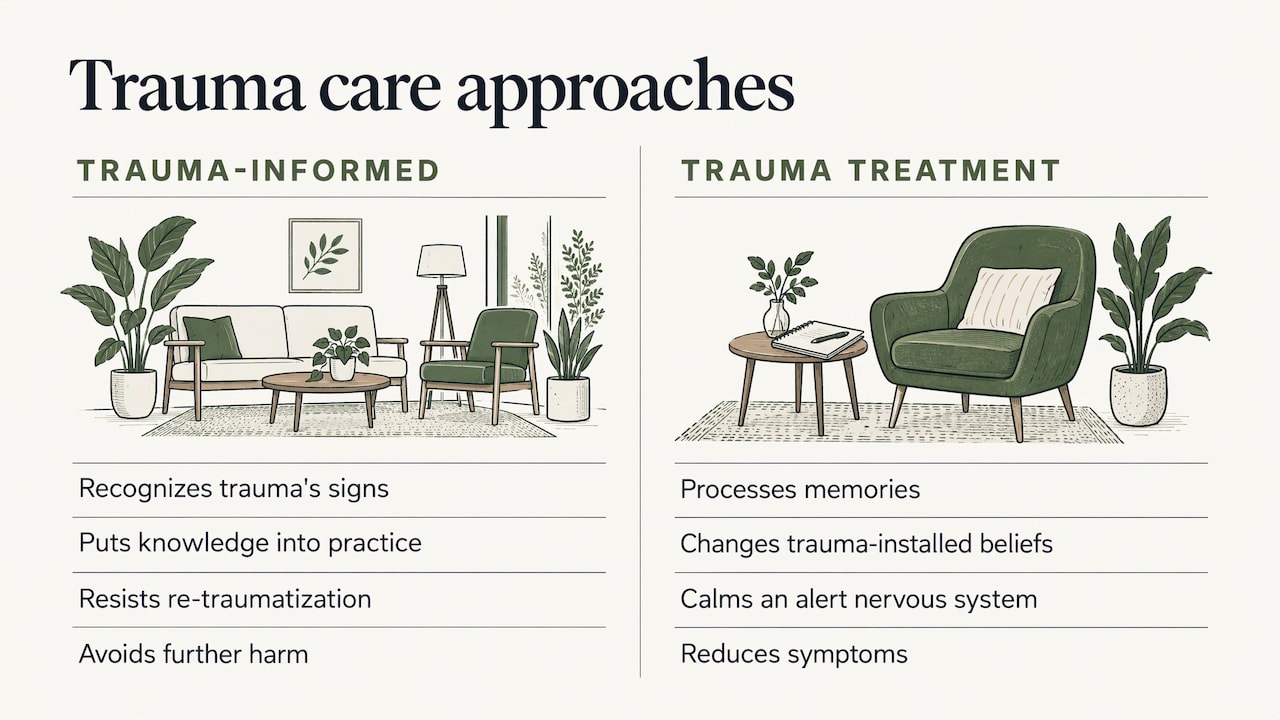
Two phrases get mixed up. “Trauma-informed” describes an attitude and a set of practices: SAMHSA’s guidance says a trauma-informed approach realizes trauma’s impact, recognizes its signs, responds by putting that knowledge into practice, and resists re-traumatization. It is how a church, school or clinic treats people so it does no further harm. Churches that want to care for hurting members well can start with the principles of trauma-informed ministry.
“Trauma treatment” is the targeted clinical work of reducing symptoms: processing memories, changing the beliefs trauma installed, and calming a nervous system stuck on alert. A welcoming, trauma-informed congregation is a gift. It is not a substitute for treatment when symptoms are interfering with your daily life. The best Christian trauma counseling does both: it is gentle and safe, and it also uses real therapeutic methods.
How faith and evidence-based care fit together
The most common worry we hear is that choosing a Christian counselor means choosing less science, or that choosing science means leaving faith at the door. Neither has to be true.
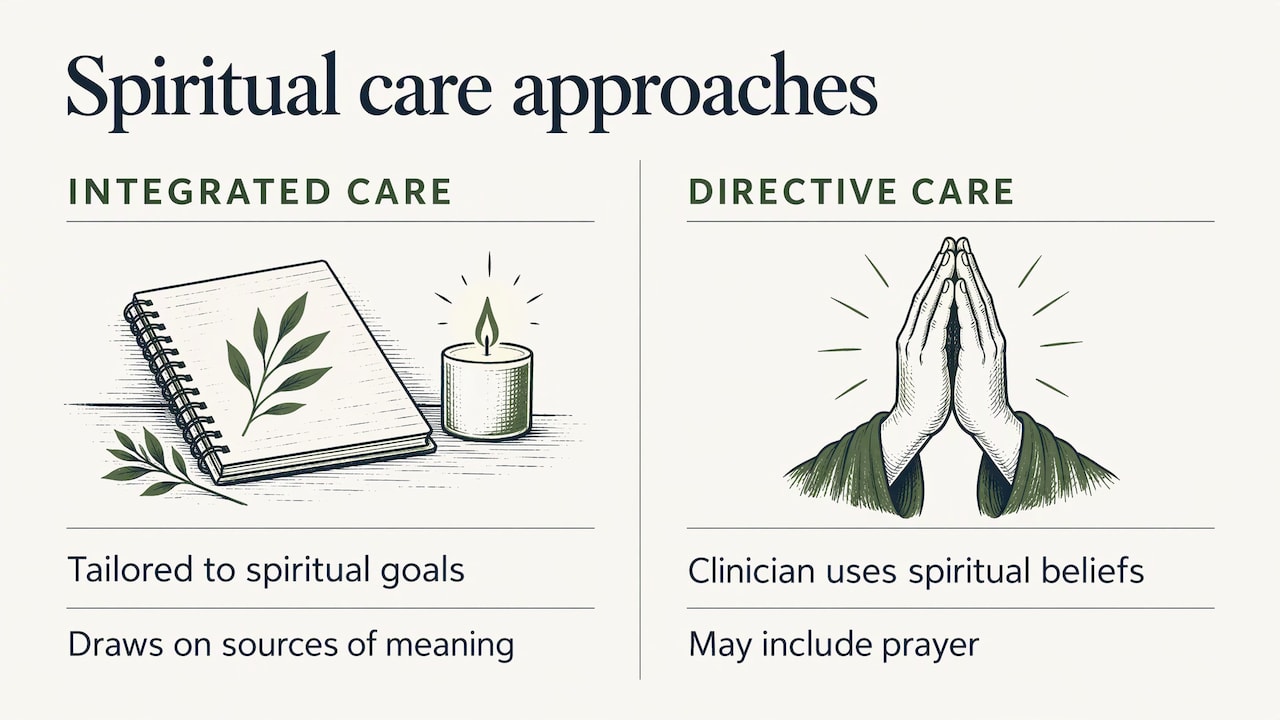
The U.S. Department of Veterans Affairs’ National Center for PTSD describes two ways clinicians bring spirituality into trauma care. In spiritually integrated care, treatment is tailored to the patient’s own spiritual goals and sources of meaning. In spiritually directive care, the clinician directly uses spiritual beliefs or practices, such as prayer. The same guidance says integration should follow the patient’s desire, with explicit informed consent, and should depend on the provider’s training, competence and availability.
That is a good standard to hold any counselor to. You set the pace. If you want prayer, you ask for it. If you want to start with coping skills and bring Scripture in later, that is a legitimate request.
What faith-integrated trauma work can look like
A peer-reviewed 2018 paper on Spiritually Integrated Cognitive Processing Therapy shows how specific this can be. The authors describe adapting cognitive restructuring, the practice of examining painful beliefs about what happened, to a client’s spiritual resources. They also describe addressing the shame, guilt, rage and spiritual struggle that often follow trauma. Treatment may encourage support from a faith community while normalizing experiences such as feeling abandoned by God, questioning faith, or losing faith after trauma.
In plain terms, a skilled counselor will not hurry you past hard questions with a Bible verse. They will make room for the anger and doubt, help you sort out what happened from what you now believe about yourself and God, and draw on your faith where it strengthens you.
EMDR (eye movement desensitization and reprocessing) is one widely used trauma method. If you are curious how it can sit alongside a Christian perspective, we have written about integrating EMDR with Christian counseling, how EMDR helps with trauma and PTSD, and whether EMDR is safe and effective. Our piece on traumatic memories and treatment explains why memories from frightening events can feel so different from ordinary ones.
Christian counseling, pastoral care and church support
Many people reasonably start with their pastor. Pastoral care brings spiritual comfort, prayer, community and wisdom, and those matter during recovery. A clergy member is not a trained clinician, though, and the two roles are different.
The 2018 Mental Health: A Guide for Faith Leaders, produced with the American Psychiatric Association Foundation and HHS, tells faith leaders to distinguish whether an experience is a symptom of mental illness, a religious or spiritual problem, or both. That distinction matters for you too. Nightmares, panic and emotional numbness after an assault are not a failure of faith, and prayer alone is not designed to treat them. Your church can walk with you while a trained counselor treats the symptoms.
When to move from church support to clinical care
The same guide gives clear markers:
- Immediate danger. Thoughts of suicide, self-harm or harming someone else call for prompt or immediate referral to clinical care. If you or someone you love is in crisis right now, call or text 988, the Suicide & Crisis Lifeline, or call 911.
- Distress that persists. Ongoing distress or hopelessness, or added impairment after four to six pastoral sessions, warrants a clinical assessment and treatment, while the faith leader continues to support you.
In other words, you do not have to choose between your church and a counselor. The strongest recovery plans often include both.
How to evaluate a Christian trauma counselor
A shared faith is comforting, but it should never be your only criterion. Trauma work done badly can leave you feeling worse, so ask these questions before you begin.
1. Are they a licensed clinician?
In Texas, licensed professional counselors, marriage and family therapists, clinical social workers and psychologists are credentialed by the state and trained in diagnosing and treating mental health conditions. Ask what license a counselor holds and what supervision they have. Some Christian credentials are for lay caregivers instead. For example, the American Association of Christian Counselors’ document on its Board Certified Biblical Counselor credential describes it as a lay counseling and caregiving credential with 90 contact hours of training and at least 20 continuing-education hours every two years. That is real training for caregiving and spiritual support. It is a different level of preparation from clinical licensure, so for trauma symptoms, start with a licensed clinician.
2. What trauma training do they have?
Ask which methods they use for trauma, how they were trained, and how they pace the work. Good trauma therapy begins with safety and stabilization and does not push you to relive everything in the first session.
3. How do they approach your faith?
Ask how they bring faith into sessions. You are looking for someone who follows your lead, asks about your beliefs, and can handle doubt, anger at God and complicated feelings about the church without alarm. Consent should be clear, as the VA guidance above describes.
4. Do they fit your situation?
A child’s trauma work looks different from an adult’s. A couple recovering from betrayal or a family after a loss needs a counselor who works with relationships, not only individuals. Ask whether the practice serves the person or people who need help.
What to expect in a first session
A first appointment is mostly a conversation. Your counselor will ask what brought you in, what you are noticing day to day, and what you hope will change. You do not need to tell the whole story. Many clients are surprised how much of early trauma counseling is about building safety: learning to settle your body, understanding why your reactions make sense, and agreeing on a pace.
You can also say what role you want faith to play. Some clients want to open and close in prayer. Others want to keep sessions clinical at first. Either is fine, and you can change your mind as you go.
Perspective from The Bridge Therapeutic Services
People come to us afraid of two things. Some worry that a Christian counselor will tell them to pray harder and move on. Others worry that a clinical therapist will treat their faith as part of the problem. We want both groups to know that healing does not require choosing.
At The Bridge Therapeutic Services, our therapists use evidence-based methods tailored to each client and bring a Christian perspective when a client wants it. We take a holistic, health-centered view: your mind, your body, your relationships and your spiritual life all matter, and trauma touches every one of them.
What we want most is for you to feel seen. That means no rushing, no shame about doubt or anger, and no pressure to explain your story before you are ready. It also means practical tools, because understanding why you feel the way you do is only half of recovery. The other half is learning how to live differently, and children, teens, couples and families need that as much as individuals do.
If you are carrying something heavy, you do not have to carry it alone, and you do not have to leave your faith outside the door to get skilled help.
Jennifer Wood, LPC-S
Trauma counseling for you, your marriage or your family
Trauma rarely stays with one person. A parent’s unresolved experience can shape how the home feels, and a child’s trauma affects the whole family. We offer several ways in:
- Individual work for adults processing their own experiences, through individual counseling.
- Couples work when past wounds are showing up in the marriage, through marriage and couples counseling.
- Family work to rebuild trust and communication, through family counseling.
- Support for children and teens facing emotional struggles, through child and teen counseling.
- Grief care when loss is part of the story, as described in our guide to Christian grief counseling.
Start counseling with The Bridge Therapeutic Services
If you live in or near Tyler, Texas, our trauma and PTSD counseling pairs evidence-based care with a faith-informed perspective. Our therapists work with individuals, couples, families and children, and you can meet them on our therapists page. Sessions are billed as private pay or through health insurance, and our online therapy and telehealth option makes care available across Texas.

To learn more about how we blend clinical practice with Christian values, read about what we believe or reach us through our main site.
FAQ
Is Christian trauma counseling the same as biblical counseling?
They overlap but are not identical. Biblical counseling usually centers Scripture as the main source of guidance. Christian trauma counseling, as we practice it at The Bridge Therapeutic Services, integrates evidence-based psychological methods with a Christian perspective. Ask any counselor how they combine the two and what training they hold.
Do I have to be religious to try it?
Faith-informed care is designed around what you want. If you hold Christian beliefs, your counselor can include prayer, Scripture and spiritual questions. Federal VA guidance says spiritual integration should follow the patient’s desire and informed consent, so you decide how present faith is in sessions.
Can my church or pastor replace a trauma counselor?
Church support is valuable, but it works best alongside professional care. HHS-backed guidance for faith leaders recommends clinical assessment when distress or hopelessness persists or impairment grows after four to six pastoral sessions, with the pastor continuing to support you. In any immediate danger, call 988 or 911.
Does trauma counseling mean I have to talk about everything right away?
No. Good trauma care starts with safety, pacing and building coping skills. You and your counselor decide together when and how to approach painful memories, and you can slow down at any point.
Can my child or teen get Christian trauma counseling?
Yes. Children and teens facing emotional struggles can be seen through our child and teen counseling, and families can be included when that helps. Parents can also use our parenting support to learn how to help at home.
T
The Bridge Therapeutic ServicesTalk Through Your Trauma Care Questions
Call to ask about Christian counseling that addresses trauma and other mental health concerns through a faith-informed, evidence-based approach.
+1 903 283 8729
Sources
- SAMHSA’s Concept of Trauma and Guidance for a Trauma-Informed Approach (2014)
- VA National Center for PTSD: Addressing Religious or Spiritual Dimensions of Trauma
- Spiritually Integrated Cognitive Processing Therapy (2018)
- Mental Health: A Guide for Faith Leaders (2018)
- Board Certified Biblical Counselor credential document (2019)
- Trauma-informed ministry principles